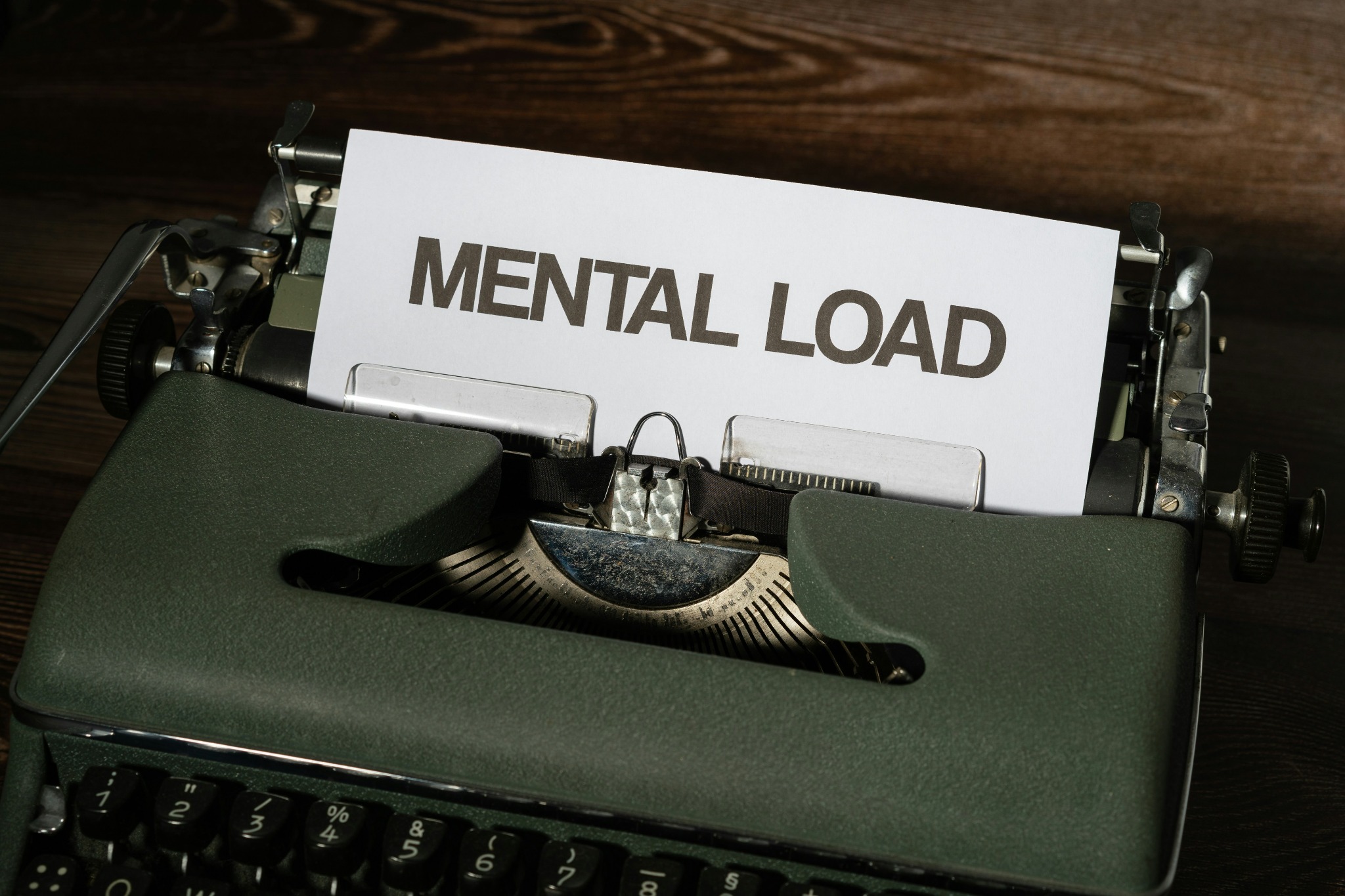
The mental load
Without fail, every time I hit ‘publish’ on an article I’ve written about mental health, I immediately wonder if anyone would take me seriously if they knew I’d spent the morning in crisis. Or that I’m consistently warring with my own psychological problems and rarely feel on the winning side.
Sure, I’m a trained mental health first aider. So I’ve already showcased a passion for supporting others when they’re struggling – I have a vested interest. Yes, I’ve studied an introduction to counselling skills course and a course on awareness of mental health problems. So that knowledge, alongside the lengthy research I do for every piece, informs my writing, meaning it’s grounded in factual information too.
And of course, as well as a long family history of mental health problems, I’ve also got lived experience and I’ve made it my mission to research and intellectually understand as much about my own conditions as possible. So that in itself means I’m well-placed to share authentically.
But I still frequently feel like an imposter in the thought-leadership arena – like I often do in my own life. Because identity disturbance is a core symptom of one of my mental health conditions – borderline personality disorder (BPD). Alongside the cognitive distortions and the ‘splitting,’ it’s shocking that I manage to publicly share so much of my writing on the topic.
The paradox
I question myself constantly being both an advocate and someone who actively struggles. The assumption – sometimes spoken, sometimes implied – is that we’ve done the work, found what works and emerged on the other side with hard-won wisdom to share. We’re supposed to be the success stories, the proof that it gets better, the ones who’ve found the ‘golden elixir’.
But sometimes that’s not the case. Sometimes advocacy exists alongside ongoing crisis. Sometimes, I’ll be writing about workplace mental health support on a good day, and on a bad day, I’ll be thinking that the current storm is the one I won’t be strong enough to weather. I fear that people think I’ve got it all figured out. Or that, on finding out I don’t, will feel deceived by my alleged authority on the matter.
I've internalised the pervasive assumption that only the "recovered" are allowed to speak, that lived experience is only valuable once it's safely in the rear view. This is a fundamental misunderstanding about what mental health advocacy should look like. And exactly the kind of thinking that keeps stigma alive.
The lived experience
But on the days when I’m feeling confident in my voice and my deep-rooted understanding, I know that my own mental health issues don’t disqualify me from this work. I understand crisis intimately – in my body and in my lived reality. I know what it feels like when your brain is lying to you. I recognise the signs of someone struggling because I’ve been there, repeatedly. I understand the gap between being encouraged to reach out when you’re drowning and the rocky road to actually accessing professional mental health support.
My formal training matters. The Mental Health First Aid course, the counselling skills, the awareness training – these give me frameworks, language, evidence-based approaches. But my lived experience gives me something the courses can’t: I know what it feels like to receive support when you’re vulnerable. And what it feels like when you don’t know where to turn. I know which words might hurt and which can heal. I know the difference between being helped and being managed. Academic knowledge and lived wisdom. Professional training and personal truth. The combination creates a more complete and honest perspective on mental health than either approach alone could offer.
My family history adds another layer. My mental health issues don’t exist in isolation (even though I often feel so very alone when in the depths of them). They’re intergenerational, woven through my story. This gives me perspective on how mental health can be inherited, how trauma passes down and how stigma operates within families and cultures. It’s made me think deeply about what it means to break cycles and to speak openly when previous generations couldn’t or wouldn’t.
The energy economics
But I’d be lying if I said this dual role was easy. It’s not. Advocacy work can be draining, even when I’m in a good place mentally. It means immersing myself in pain – my own and others’. Staying present with difficult emotions and researching triggering topics while maintaining enough composure to communicate clearly when every instinct says to protect myself and hide.
Even the act of writing itself is emotional labour. I can’t just vent – it’s not an online journal. I have to craft my message, consider how it will land, be measured and thoughtful. The hidden work of advocacy is staggering: the discarded drafts, the research rabbit holes, the emotional processing required to transform personal pain (and ramblings) into something useful for others.
Then there’s what it costs when I’m trying to manage my own symptoms. Having major depressive disorder robs me of the belief that my words matter. That I do. I’ve sat staring at draft after draft about wellness as a commodity while my brain tries to convince me that nothing I do or say will make a difference.
The irony is that the moments when I need to be visible as an advocate are often the moments when I barely feel like a person (another cruel symptom of BPD). And the guilt of not being active, visible, present – it’s crushing. It feels like letting down a community that depends on my advocacy (even if I haven’t fully established that community yet), proving that I was never really up to the task.
With BPD the stakes feel even higher. I’m managing emotional intensity that can swing dramatically, trying to maintain the measured, thoughtful voice that advocacy requires. There’s a constant internal calculation: is this reaction proportional? Will people see me as unstable if I’m too passionate? Am I being authentic? Am I being “too much”? The effort to emotionally regulate just to show up is exhausting.
The splitting – that black and white thinking that can present with BPD makes nuanced conversation about mental health incredibly difficult some days. I’ll write something, read it back, and see only extremes: either it’s brilliant or absolute rubbish, I’m helping or I’m causing harm, people will get it or think I’m attention-seeking. Because holding space for complexity is a daily struggle in every facet of my life.
The exhaustion and the credibility questions feed each other in a vicious cycle. The more exhausted I am from managing both advocacy and my own mental health, the more I question whether I'm capable of doing this work. And the more I question my credibility, the more energy I expend trying to prove – to myself and to others – that I'm 'stable enough’.
The boundary struggle
One of the hardest questions I face: when do I step back from trying to help others in order to take care of my own wellbeing? Where’s the line between being helpful and being self-destructive? As a mental health first aider, I’m trained to recognise when I’m out of my depth, when someone needs professional help beyond what I can offer. But what I don’t know how to do is recognise when I’m too depleted to help at all. When my own mental health is so fragile that holding space for someone else might break me.
The vulnerability of being open, about BPD specifically, scares me. Even within professional mental health communities, BPD carries extra stigma. The stereotypes – unstable, difficult, dramatic – lurk in the shadows of every disclosure.
Even when I feel I’ve made peace with being open with my mental health problems, I’m constantly calculating the professional risk. Will this article end up in front of a hiring manager who writes me off? Will colleagues reinterpret every interaction through the lens of my diagnoses? Will someone use my openness against me? These fears are based on the reality that disclosure still carries consequences, even in apparent progressive spaces.
And another thing (perhaps this has turned into a journal entry), How much should I be sharing about my own experience? Over the years I’ve chosen to be relatively open about having BPD and Major Depressive Disorder with the people I’m closest to. But there’s a difference between naming your condition and detailing every crisis, every difficult day. I wrestle with this constantly because sometimes I’m unsure that the people in my life fully grasp how much I struggle, so I want them to know how so many of my thoughts, feelings and actions lead back to my symptoms.
But I don’t want to come across all “woe is me” or to define myself by my diagnoses either. I want to be fully transparent and authentic without turning my mental health into a performance. I want to reduce stigma without sacrificing my privacy. And I want to be relatable without being raw in ways I’ll regret later (at, like, 3am).
But even showing up as messy and complicated and struggling, is still showing up. My training is valid. My experience is valuable. So I won’t stop. I can’t.
Post a comment