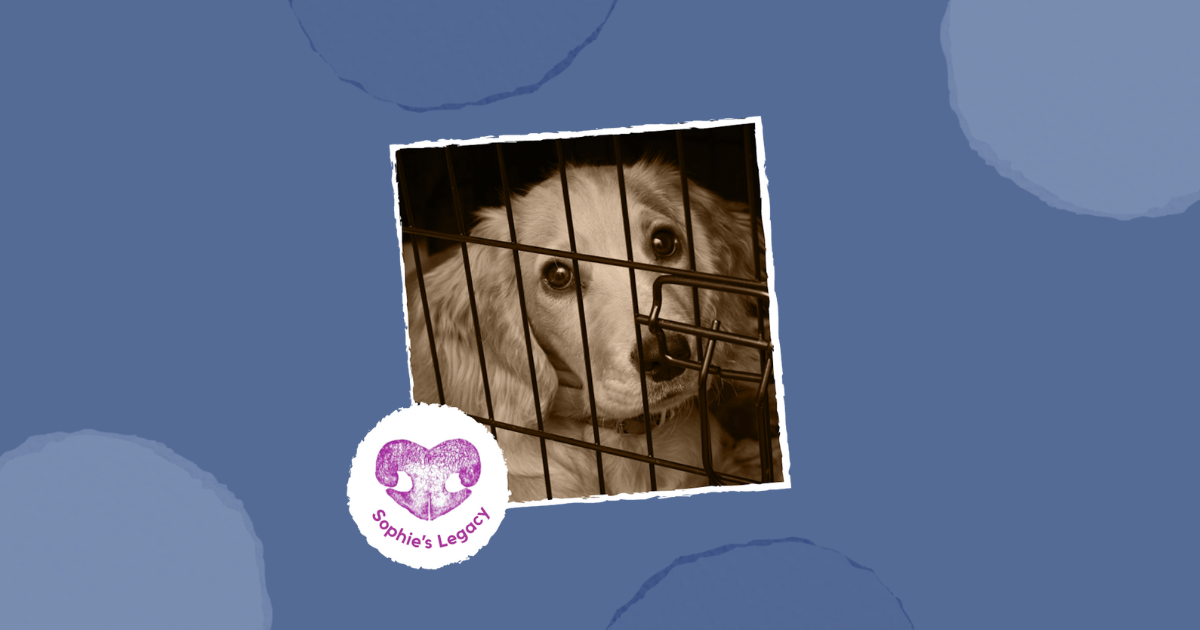
Sophie's Legacy: the truth about puppy farming and overbreeding
Sophie's story broke our hearts. But unfortunately, it’s not unique. She endured a lifetime of abuse – abuse that is legal, profitable and happening right now to thousands of dogs across the country.
What is puppy farming?
These are not farms in any traditional sense. They are industrial breeding operations where dogs are treated as production units and kept in conditions that would horrify many of the people purchasing from them. While large-scale puppy farms are the most visible problem, backstreet breeders – operating from homes or small-scale setups – perpetuate the same cycle of exploitation, often flying under the radar by staying below licensing thresholds or avoiding regulation entirely.
Dogs – usually females – are confined to cramped cages or kennels, often in sheds or outbuildings with little ventilation, minimal light and no veterinary oversight. They are bred back-to-back, leaving no time for their bodies to recover. They rarely see daylight and rarely experience human kindness.
When these dogs inevitably develop health problems – such as infections, tumours, dental disease, behavioural trauma – they receive no treatment. They're too valuable as breeding machines to waste money on medical care. They simply continue to produce litter after litter until their bodies give out. And then, like Sophie, they are discarded. Dumped on roadsides, abandoned in fields or occasionally surrendered to rescue with a fabricated story. By that point, the damage is often irreversible.
Sophie's advanced mammary tumours were the direct, predictable consequence of repeated breeding without appropriate rest periods or veterinary care. Every litter she produced increased her risk. By the time she reached us, her body was riddled with cancer that had been growing, unchecked, for years.
The hidden cost of "bargain" puppies
When you see a puppy advertised online for what seems like a reasonable price, there's a good chance that puppy came from a situation like Sophie endured. The economics of puppy farming are simple. Buy or breed dogs who can produce large litters (like spaniels, retrievers or “designer” crossbreeds). Keep costs minimal – no vet bills, proper food or adequate housing. Sell puppies quickly through online marketplaces or social media. Never let buyers see the mother or the breeding conditions. Maximise profit per litter – and when the mother can no longer breed, dispose of her and start again.
Many buyers don’t fully understand what they're supporting. They're told the puppies are "home-raised" or "family-bred." They're shown a clean house or garden for the handover. They never meet the mother or see where she lives. But the puppies themselves often carry the scars of this system. They arrive in their new homes with:
- Untreated parasites and infections
- Genetic conditions from poor breeding practices (hip dysplasia, eye problems, heart defects)
- Severe socialisation deficits from being raised in isolation
- Behavioural problems stemming from maternal stress and early trauma
- Shortened lifespans due to poor genetics and early-life health issues
Why "ethical overbreeding" is still a crisis
Puppy farms are the most visible and extreme form of breeding harm, but they're not the only problem. Even well-meaning breeders contribute to the crisis when they breed without considering the bigger picture. Every backyard breeding situation creates puppies who may end up in rescue when their owners can't cope with health or behavioural issues.
The rescue system is already overwhelmed. There aren’t enough foster homes, resources or adopters to meet the need. And yet breeding continues, driven by demand from buyers who don't realise the consequences of their choices.
The legislation failures
The UK has animal welfare legislation. The Animal Welfare Act 2006 makes it illegal to cause unnecessary suffering. The breeding regulations require licenses for anyone breeding and selling three or more litters per year. But enforcement is inconsistent at best. Puppy farmers operate knowing that the chances of inspection are minimal.
They breed dogs in Wales or Ireland and transport puppies to England for sale, use multiple addresses to avoid licensing requirements and exploit loopholes and overwhelmed local authorities. All the while, dogs continue to suffer in conditions that everyone agrees are unacceptable, but few have the resources or will to stop.
What needs to change and how you can help
We share Sophie’s story, not only to highlight the difficult realities of rescue, but also to inspire action. Here's what we need:
- Stronger enforcement of existing laws. Breeding operations should face regular inspections. Violations should result in penalties, including lifetime bans.
- Mandatory traceability. Every puppy should be traceable back to their breeder. Buyers should be required to see the mother in her normal living environment.
- Public education campaigns. People need to understand that "adopt don't shop" is more than just a catchy hashtag, it's a moral imperative when buying continues to fuel suffering.
- Support for rescue organisations. When breeding is properly regulated, more dogs will need rescue as puppy farms shut down. We need resources to cope with this transition.
- Cultural change. We need to stop viewing dogs as fashion accessories or status symbols and start seeing them as sentient beings deserving of protection.
What you can do right now
- Never buy a puppy without meeting the mother in her home environment. If the seller refuses, walk away.
- Report suspicious advertisements. If you see puppies advertised with no information about the mother, multiple breeds from the same seller or requests to meet in car parks, report it to local authorities and the RSPCA.
- Adopt from rescue. There are beautiful, healthy and loving dogs waiting for homes. Give them a chance.
- Support legislation. Write to your MP. Support organisations campaigning for stronger animal welfare laws.
- Educate others. Share Sophie's story. Talk to friends and family about where puppies often come from. Challenge the normalisation of buying dogs like they're products.
- Donate to rescue organisations. We operate on tight budgets and rely on public support to save dogs like Sophie and to intervene earlier for dogs who can be rehabilitated and rehomed.
Sophie's Legacy is a call to action. Her suffering was preventable and so is the suffering of dogs currently in breeding farms. But prevention requires all of us to care enough to change our behaviour and demand better from our systems.
For Sophie, and for every dog still suffering in her shadow, we cannot afford to look away.
Post a comment