How to protect your peace while staying politically aware
I wholeheartedly encourage people to protect their mental wellbeing by any means necessary. If your algorithm is intent on serving you clips of the malignant narcissist wreaking havoc on the USA and beyond, stop scrolling. If every news bulletin is driving you into deeper despair, turn off your notifications. But I do think it’s important to keep in mind that needing a moment to switch off is no excuse for not being politically switched on.
We’re living through dark times that demand attention. Rights are being rolled back. Welfare systems are being dismantled. The cost-of-living crisis never resolved – it just stopped making headlines. Wars are constantly being waged and we’re bearing witness to the crimes committed within them. The relentless, scroll-induced reminder that something, somewhere, is always on fire (and the climate crisis makes this literal). So staying informed is a moral obligation.
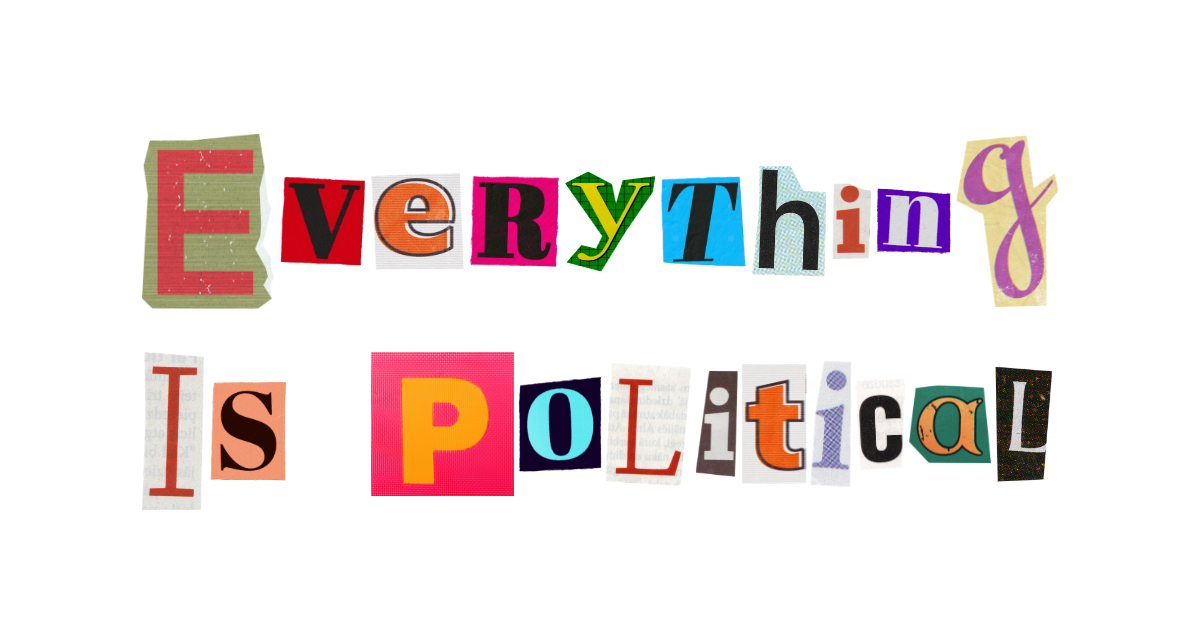
Everything is political
In my early 20s, I shamelessly labelled myself as “apolitical”. I was naïve, I didn’t understand politics (that’s by design, btw) and I was lacking the confidence in my voice. Luckily, I grew up and information became more accessible. I was able to see something on the news and research it further, figure out what I believed in and what I didn’t want to support, whether it was happening in my own backyard or not. And that’s when I figured out that everything is political.
Everything we do – and everything we don’t do – is political. Getting your news from The Guardian over The Daily Mail? Political. Rejecting mainstream media entirely? Political. Still streaming that franchise despite everything you know about its creator? Political.
There is no neutral ground. Opting out is still political, just with less self-awareness.
Let’s use the workplace as an example. A woman’s very existence within it is political. Until 1946, the marriage bar meant that women employed in the Civil Service were required to resign the moment they married. And while having a marriage bar was made illegal in the UK by the Sex Discrimination Act 1975, in many industries an informal version lingered long after legislation changed.
Attitudes took much longer to alter. A 1947 Treasury document, just a year after abolition, described married women in the civil service as "a perfect nuisance", noting that "naturally, their home comes first with them." Women who remained in work after marriage were viewed with suspicion, their commitment questioned and their loyalty to their employer treated as secondary to their loyalty to their households.
It’s a pattern we’ve never really broken. The marriage bar is gone but the assumption that women's careers are interruptible – by marriage, motherhood or other caring responsibilities – persists in hiring decisions, promotion rates and in the gender pay gap that still sat at 12.8% across all employees as of April 2025. (And before anyone says, 'but it's only 6.9% for full-time workers', the reason women are disproportionately in part-time work is a structural inequality all its own).
Most minoritised ethnic groups in the UK earn on average less than their white British peers, and disabled people have, on average, lower incomes than non-disabled people. Until very recently, there wasn't even a legal requirement for employers to measure or report those gaps. Mandatory ethnicity and disability pay gap reporting for large employers was only committed to in the King's Speech in July 2024.
Why engaging feels harder than ever
The 24-hour news cycle was not designed with your nervous system in mind. It was designed for engagement, with fear, outrage and urgency being its most effective fuels.
Add to that the algorithm of social media, which learns exactly which topics spike your cortisol and serves you more of them, and you have a near-perfect system for keeping people chronically activated.
For those of us already living with anxiety and/or depression, this baseline noise hits harder. But even people without a diagnosed mental health condition struggle to process the volume and weight of what's being asked of them. We weren’t built for this. And pretending we can absorb it all, indefinitely, without cost, is its own kind of madness.
As someone who’s a very all or nothing kind of girl, I find it hard to step out of politically charged thinking. A simple conversation about the weather can spark a rant over the state of the ozone layer. A chat about my current job search can tailspin into a deep dive on austerity. Don’t get me wrong, I can have a laugh, but I do view the world through a political lens these days.
But I certainly don’t assume that if you’re not fully switched on it means you've opted out. That if you’re not 100% engaged, you’re indifferent. I think that I could do with a little more balance. Protecting your peace doesn't mean pretending things are fine. It means being intentional about how, when and how much you engage so that when you do, you're present, grounded and useful. Because grinding us down, so that we’re too depleted to fight, is exactly how insidious laws creep in.
How to find balance
Set news boundaries that work for you.
This looks different for everyone, but a useful starting point is choosing one or two trusted sources and set times in a day to check in. Constant monitoring doesn't make you better informed, it keeps your nervous system in a state of emergency.
Audit your social media diet.
Notice which accounts leave you feeling informed and motivated, and which ones leave you feeling hopeless and wound up. Curate accordingly. Muting isn't the same as not caring.
Distinguish between awareness and action.
Reading about something distressing and doing nothing with that feeling is a surefire route to despair. Where you can, channel awareness into something. Donate, share a post, have a conversation or write a letter to your MP. Action, however small, restores a sense of agency.
Give yourself permission to rest without justification.
Rest is not a reward for productivity. It’s not something you earn by suffering enough first. In a world that’s difficult to navigate, it’s an act of self-preservation.
Stay connected to people.
It's easy to become so focused on the big picture that you lose sight of the human scale. The conversations, relationships and moments of ordinary joy ensure you don’t lose sight of what you're trying to protect.
Know your limits and communicate them.
If a conversation is tipping from productive to distressing, it's okay to say so. You don't have to debate everything, engage with every provocation or justify your need for space. Boundaries are not weakness. They're how you stay in the game long term.
Find your form of engagement.
Not everyone is built for the frontline. Some people march. Some write. Some people volunteer or simply show up consistently for the people in their immediate community. All of it counts. None of it requires you to sacrifice your mental health as proof of sincerity.
On the privilege of peace
When the policies being debated directly affect your safety, income, rights or bodily autonomy, "protecting your peace" is a luxury some people can’t afford. If you don't have the option to look away, then this piece is more about finding moments of relief within a reality you can't escape. Small things. Micro-rituals. People who make you feel safe. Reminding yourself that your exhaustion is the cost of being on the sharp end of decisions made by people who will never feel their impact.
And if you're someone who does have the privilege to move through the world without thinking about politics – it’s likely that they’re working in your favour. Let that be a reason to stay engaged on behalf of those who don't. Not to the point of your own collapse, just consistently.
Either way, the long game is the same. The issues we're facing won’t be resolved in a news cycle, or a month or maybe our lifetime. Which means the most radical thing you can do right now is take care of yourself well enough to still be part of the good fight. Protect your peace. Stay curious. And keep going at whatever pace keeps you in the game.
If you're finding the current climate particularly hard on your mental health, Mind has resources on anxiety, news fatigue and staying well during difficult times.
Post a comment